




Men are often encouraged to push through stress, tiredness and mental overload. But when the pressure continues day after day, it can affect how we feel, think and respond to the demands around us.
Ashwagandha (Withania somnifera) is an Ayurvedic herb with a long history of use as a restorative tonic. Rather than being a stimulant that simply pushes the body harder, it has traditionally been used to help the body adapt to stress while supporting a calmer, more balanced state of mind.
So, what are the potential benefits of ashwagandha for men, and what can this traditional herb realistically offer?
What is Ashwagandha?
Ashwagandha is a small shrub native to India, parts of the Middle East and North Africa. Its root has been used in Ayurvedic medicine for centuries.
In Ayurveda, ashwagandha is traditionally considered a rasayana, or rejuvenative tonic. Rasayana herbs are used to nourish and restore the body, support resilience and promote general wellbeing over time.
Ashwagandha is also traditionally used in Ayurvedic medicine as an adaptogen to help the body adapt to stress, particularly during periods of increased physical, mental or emotional demand.
Why is ashwagandha relevant to men?
Stress does not always look dramatic. For many men, it appears as feeling constantly switched on, becoming more reactive, finding it difficult to unwind or carrying ongoing nervous tension.
Ashwagandha may be particularly relevant during busy or demanding periods because its traditional uses extend beyond a single symptom. In Ayurvedic medicine, it has been used to support the way the body responds to stress while also calming the mind, soothing the nerves and supporting emotional balance.
1. Traditionally used to help the body adapt to stress
Ashwagandha is traditionally used in Ayurvedic medicine as an adaptogen to help the body adapt to stress.
This does not mean eliminating every source of stress. Instead, adaptogenic herbs have traditionally been used to support resilience when the body is exposed to ongoing demands.
For men balancing work, family, training and other responsibilities, this traditional use may make ashwagandha a valuable addition to a broader wellbeing routine.
It is important to remember that no supplement replaces the fundamentals. Regular movement, nourishing food, sufficient rest and time to recover still form the foundation of a healthy stress response.
2. Traditionally used as a rejuvenative tonic
Ashwagandha is traditionally used in Ayurvedic medicine as a rasayana, or rejuvenative tonic.
The idea of a rejuvenative tonic is especially relevant when someone feels worn down by a prolonged period of physical or mental demand.
In traditional Ayurvedic practice, ashwagandha was not viewed as a quick burst of energy. It was used as a restorative herb to support vitality, resilience and general wellbeing.
This is one of the reasons ashwagandha has remained so popular. Its traditional use is centred on supporting the body over time rather than creating a temporary stimulant effect.
3. Traditionally used to calm the mind
A busy mind can make it difficult to relax, even once the working day is over.
Ashwagandha is traditionally used in Ayurvedic medicine to calm the mind. This may make it particularly relevant for men who feel mentally overstimulated or find it difficult to properly switch off during stressful periods.
The traditional intention is not to create sedation or dull mental function. It is to encourage a calmer internal state while supporting the body’s ability to cope with everyday demands.
4. Traditionally used to soothe and calm the nerves
Ashwagandha is traditionally used in Ayurvedic medicine to soothe and calm the nerves. It is also traditionally used as a calmative and nervous system relaxant.
Stress can be felt physically as well as mentally. Restlessness, irritability, muscular tension and a persistent sense of being on edge can all accompany periods of increased pressure.
Ashwagandha’s traditional use as a calmative makes it an interesting option for men seeking support during mentally or emotionally demanding periods.
5. Traditionally used to relieve nervous tension and unrest
Ashwagandha is traditionally used in Ayurvedic medicine to decrease, reduce and relieve nervous tension and unrest.
Nervous tension can build gradually. It may present as feeling wound up, unsettled or unable to fully relax, even when there is an opportunity to rest.
Supporting the nervous system should also include practical foundations such as regular meals, adequate hydration, physical activity, reduced stimulant intake where appropriate and sufficient time away from work and screens.
6. Traditionally used to relieve symptoms of mild anxiety
Ashwagandha is traditionally used in Ayurvedic medicine to decrease, reduce and relieve symptoms of mild anxiety.
This indication relates specifically to traditional Ayurvedic use. Ashwagandha is not intended to replace prescribed treatment or individual medical care.
7. Traditionally used to support emotional and mood balance
Emotional balance does not mean feeling calm and positive at all times. It refers to having the resilience to move through normal challenges without feeling continually overwhelmed by them.
Ashwagandha is traditionally used in Ayurvedic medicine to support healthy emotional and mood balance. This may be relevant during demanding periods when stress begins to influence patience, motivation or general wellbeing.
8. Provides antioxidant support
Ashwagandha has antioxidant activity and helps reduce free radicals formed in the body.
Free radicals are unstable molecules produced through normal metabolic processes and exposure to factors such as pollution, ultraviolet radiation and other environmental stressors.
The body has its own antioxidant defence systems, while antioxidant compounds from foods and herbs can provide additional support.
Antioxidants should be viewed as one part of a healthy lifestyle that includes a varied diet rich in colourful plant foods.
How long does ashwagandha take to work?
Ashwagandha is traditionally used as a tonic rather than a rapid stimulant, so consistency matters.
Individual responses vary according to the preparation, dose, general health and reason for use. Always follow the directions on the product label and avoid assuming that taking more will produce a better result.
Is ashwagandha suitable for everyone?
Ashwagandha can cause digestive upset, nausea, loose stools or drowsiness in some people.
It may also interact with thyroid, blood pressure, blood glucose, sedative and immunosuppressant medicines. Rare cases of liver injury have also been reported in association with ashwagandha products.
Speak with a qualified health professional before use if you have a medical condition, take regular medication or have concerns about whether ashwagandha is appropriate for you. Men with prostate cancer should obtain individual medical advice before using ashwagandha.
Stop taking the product and seek medical advice if you develop symptoms that could indicate liver injury, including yellowing of the skin or eyes, dark urine, unusual fatigue, abdominal pain or persistent nausea.
The bottom line
The most responsible way to understand ashwagandha is not as a miracle herb or a shortcut to better health. Its value lies in its long history of traditional Ayurvedic use.
For men, ashwagandha is traditionally used in Ayurvedic medicine as a rejuvenative tonic and adaptogen to help the body adapt to stress. It is also traditionally used to calm the mind, soothe the nerves, relieve nervous tension and mild anxiety, and support healthy emotional and mood balance.
In addition, ashwagandha provides antioxidant activity and helps reduce free radicals formed in the body.
Combined with good nutrition, movement, rest and recovery, ashwagandha may offer useful support during the more demanding seasons of life.
Always read the label and follow the directions for use. This information is general in nature and is not intended to replace individual medical advice.
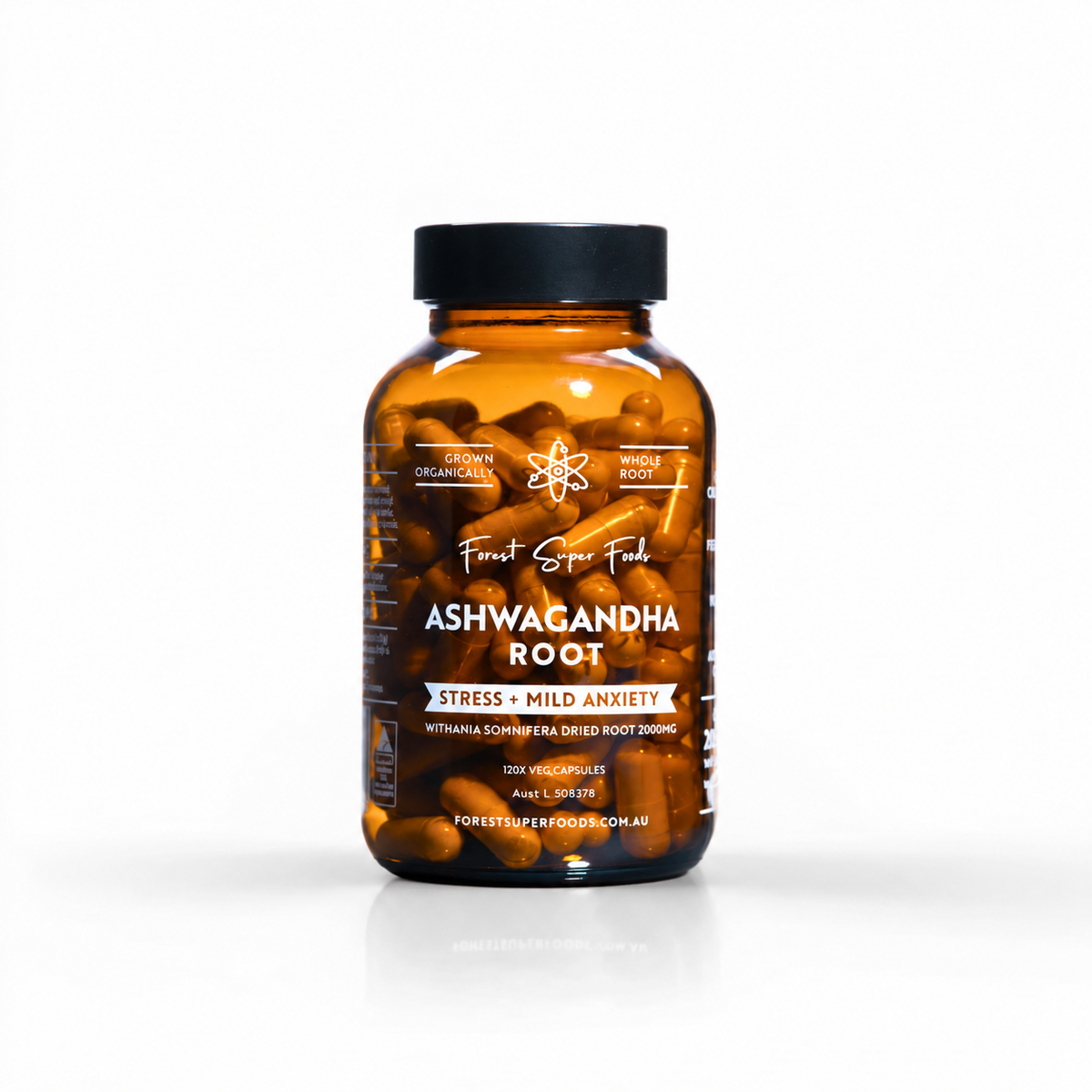
Organic Ashwagandha CapsulesA powerful supplement for your health and wellness. Order Now |

|
Frequently Asked Questions
What does Ashwagandha do for the body?
Ashwagandha is a traditional adaptogen known for helping the body manage stress.
Is Ashwagandha allowed in Australia?
Yes, Ashwagandha is approved for use and sale in Australia as a listed ingredient in supplements. At Forest Super Foods, we ensure our Ashwagandha is 100% organic and compliant with Australian standards and regulations.
What happens if I take Ashwagandha daily?
Many people take Ashwagandha daily for long-term stress support, improved mood, and better sleep. Most benefits are noticed gradually over weeks. Always follow the recommended dose and consult a healthcare professional if you're on medication or managing a health condition.
Does Ashwagandha have side effects?
Ashwagandha is generally well tolerated, but in some cases, it may cause digestive upset, drowsiness, or hormonal effects. It's not recommended during pregnancy, and people with thyroid conditions or autoimmune disorders should consult their doctor first.
Does Ashwagandha make you sleepy?
Ashwagandha doesn't act like a sedative, but it may promote relaxation and help reduce overactive stress responses. This calming effect may support deeper sleep at night without causing grogginess during the day.
How long does it take for Ashwagandha to kick in?
Most people start noticing effects within 2 to 4 weeks of consistent use. However, it can vary depending on your health, dosage, and what you're using it for (e.g., stress, sleep, energy, or hormones).



Leave a comment
All comments are moderated before being published.
This site is protected by hCaptcha and the hCaptcha Privacy Policy and Terms of Service apply.